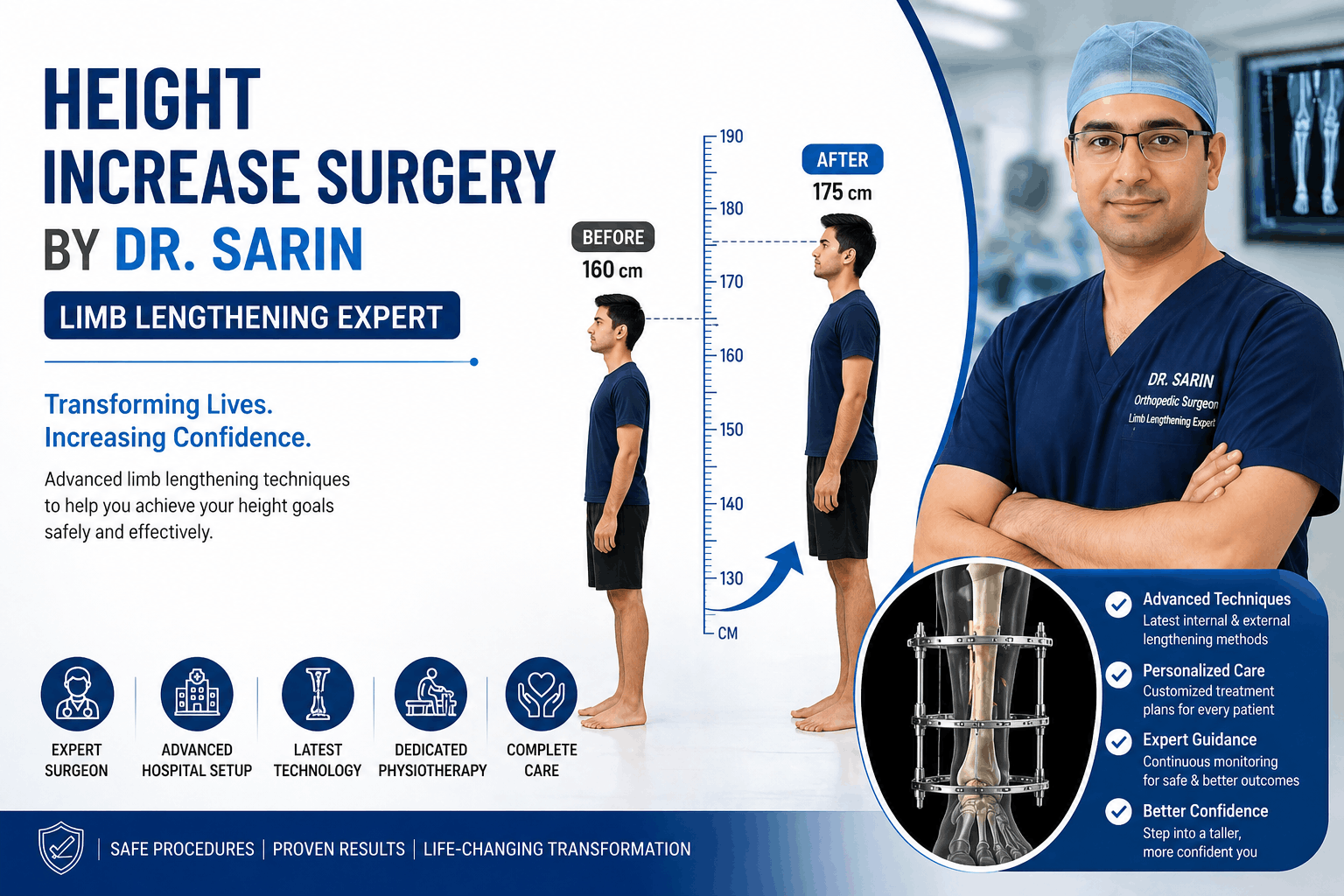

Limb lengthening has become more advanced and patient-friendly over time, mainly due to improvements in medical technology. Earlier, this procedure was considered difficult and uncomfortable, but today it is more precise, safer, and easier to manage. These developments are helping patients achieve better results with fewer complications. One of the biggest improvements is the use of modern surgical planning tools. Doctors can now study bone structure in detail before surgery, which helps them plan the procedure more accurately. This reduces errors and ensures proper alignment during bone lengthening. Another major advancement is the introduction of internal lengthening systems. These devices are placed inside the bone and gradually increase length in a controlled way. Compared to older external methods, these systems offer better comfort and allow patients to continue daily activities with fewer difficulties. Monitoring has also improved with regular imaging and follow-up care. Doctors can track bone growth closely and make adjustments when needed. This helps ensure smooth healing and reduces the chances of delays. Rehabilitation has become more structured as well. Physiotherapy and guided exercises support movement, flexibility, and strength during recovery. With proper care and consistent follow-up, patients can recover more effectively and adapt to their new height. Overall, technology has made limb lengthening more reliable and accessible. With better planning, safer techniques, and improved recovery support, patients today can expect more predictable and successful outcomes.