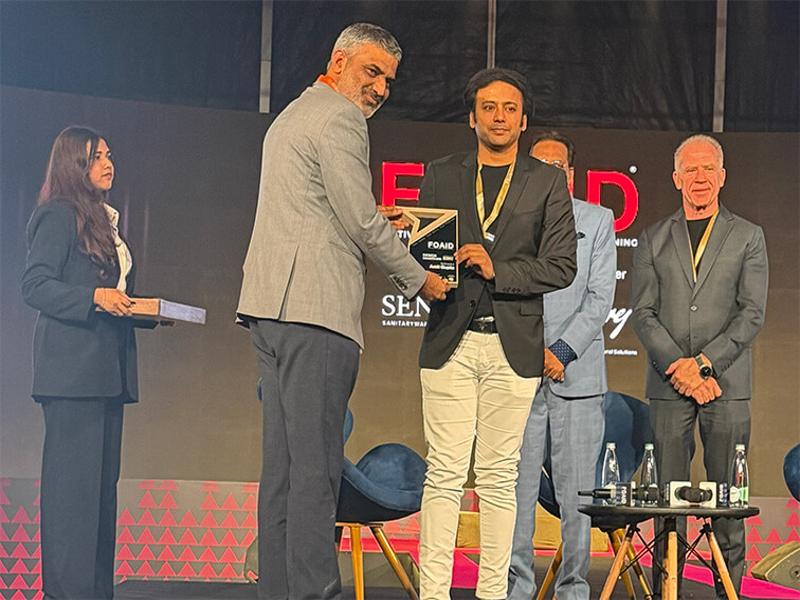

In the 12th-edition of the FOAID 2025 – the distinguished “Festival of Architecture & Interior Designing” – which unfolded in New Delhi on 21 & 22 November the design community gathered to celebrate, interrogate and project the future of built environments. Among the key voices shaping this conversation was Mr. Amit Gupta, Studio Symbiosis, shared a panel with Ajay Gupta, President Architecture of M3M and Douglas Grieco, Regional Vice President – Design Services in Hyatt. Their session, titled “Branding the skyline: The New Language of Luxury Living.” Offered powerful insights and strong perspectives from different angles into Branded Residences. The discussion signalled a critical moment for how branded Residences will change the market and the perception of luxury, articulated and experienced in contemporary India. What is FOAID 2025? FOAID has evolved into a vital platform for architecture and interior design professionals, with more than 70 design shows nationwide and 1,000+ design-talks connecting over 50,000 participants. The 2025 edition foregrounds the intersection of design, craft and climate, offering forums such as Design Arena, CMC Design Manthan, VOX Architecture Ideas, Light First, Expressions and others. Amit Gupta’s presence here thus aligns with an agenda of shaping meaningful discourse beyond mere aesthetics—into value, identity and experience. Amit Gupta – Architect of Luxury, Experience, and Identity Representing Studio Symbiosis, Amit Gupta presented the most anticipated developments in India’s real estate sector — first Jacob & Co branded residences in Noida. Studio Symbiosis is collaborating with M3M for this project. This is the first in a growing portfolio of branded residence projects that the studio is shaping in India—marking a pivotal shift in how global brands are entering the Indian residential market. Explore Studio Symbiosis projects Inside the FOAID Discussion: Branded Residences & the Architecture of Identity During FOAID session, multiple facets of evolution of branded residences across the globe were discussed. These ranged from emerging branded residences from Miami to Dubai and now Delhi and Mumbai. The discussions covered identity, landscape, material expression, sustainability, and lifestyle branding. Difference in hospitality lead brands vs stand alone designer brands. What makes branded residences stand out as compared to regular projects. Key Insights from the Session Brand as Architectural Identity: Branded residences translate the brand’s design narrative be it Jacob and co, or Bugatti, into architectural form. Amit Gupta suggested that the skyline itself is a brand-canvas. As developers and designers vie for differentiation, the architecture of luxury housing becomes a signature, a brand-icon. A brand like Jacob & Co can brand architecture and set a standard in terms of luxury housing. Also, in contrast a project which is defined by a green façade can brand the architecture and give a totally different focus on the project. Hospitality vs Designer led brands – Douglas Grieco in comparison shared his view on hospitality-led branded residences by Hyatt and presented references of project across the world. He emphasised how service, service, and hospitality standards define the living experience. Quality of living as the New Luxury: The panel highlighted that beyond Branded Residences brands also need to incorporate quality living. The aspects such as green spaces, landscape integration, wellness driven planning, and material and spatial comfort which elevate lifestyle and shape what “luxury” truly means in modern India. Why Branded Residences Matter for India’s Luxury Market India’s luxury residential segment is at undergoing a transformation which is now driven by: Rising client sophistication – Homebuyers now look for lifestyle, identity, and curated experiences—not just square footage, Global benchmarks entering India – With international brands stepping in, expectations of design quality and service rise dramatically., Developers seeking differentiation – branding becomes a competitive edge in saturated markets. In this scenario: A voice like Amit Gupta’s helps recalibrate perceptions — luxury as meaning rather than magnitude. At FOAID, with hundreds of brands, exhibitors and thousands of professionals converging, the conversation becomes amplified. Studio Symbiosis’s involvement underscores how architecture firms are not just service-providers but thought-leaders shaping market narratives. Key Takeaways from Amit Gupta’s Session Branded Architecture must reflect the brand’s soul. – not through logos, but through design thinking, material choices, and experiential quality. Sustainability is an essential part of luxury. – Landscape, light, greenery, ventilation, and energy-conscious planning elevate both value and wellbeing. Indian luxury is entering a maturity phase. – This decade will witness a rise in branded residences, niche design collaborations, and experience-led spaces. Read about Studio Symbiosis’ design philosophy. In Summary At FOAID 2025, Amit Gupta treated the audience not just to ideas but to provocations—challenging the industry to rethink how luxury is designed, how it is branded and how it is lived. His message was clear: architecture of luxury must evolve beyond spectacle into substance. It must articulate identity, craft meaningful experience and embody responsibility. For those in the architecture, interior or real-estate ecosystem, his session at FOAID offers a template: design that is both aspirational and grounded, expressive yet sustainable, brand-aware yet deeply contextual. Studio Symbiosis’ work in branded residences signals this shift—where architecture becomes narrative, space becomes identity, and luxury becomes deeply personal.