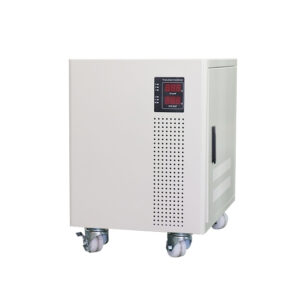
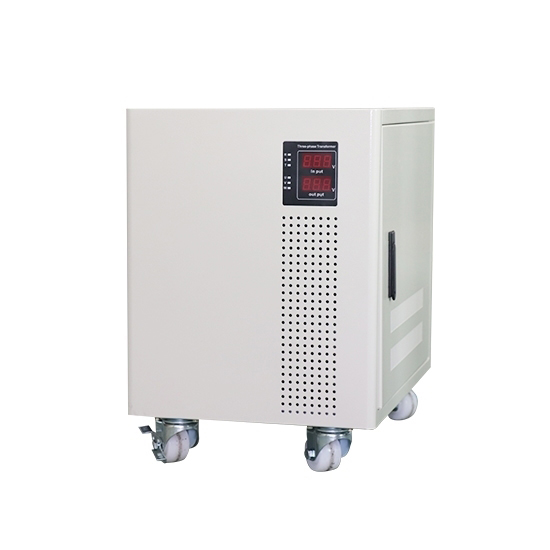

An isolation transformer is a transformer used to transfer electrical power from a source of alternating current (AC) power to some equipment or device while isolating the powered device from the power source, usually for safety reasons or to reduce transients and harmonics. It typically features equal numbers of turns in both primary and secondary windings, resulting in a 1:1 turns ratio where the input and output voltages remain the same, such as 240V to 240V or 480V to 480V configurations. The insulation barrier between windings ensures that faults in the input cannot transfer to the output, significantly increasing electrical safety by protecting users from electric shocks and completing the power source’s circuit safely. These transformers are available in single phase capacities ranging from 500 VA to 30 kVA and three phase configurations from 4 kVA to 300 kVA, with customizable voltage ranges from 0V to 690V. They incorporate high-grade insulation materials and Faraday shields to reduce potential current leakage and electromagnetic interference, thereby improving power quality and reducing electrical noise that could impact machine performance. Isolation transformers minimize power surges by insulating DC signals from the power source, allowing equipment to function without interruptions and reducing property damage risks. They are widely used in sensitive applications including marine environments, railway systems, chemical industries, power transmission, electrolysis, air conditioning, medical equipment, telecommunications, and industrial control systems. The transformers feature strong cooling capabilities with low loss thanks to cold-rolled oriented silicon steel sheets, heat dissipation fans, 180°C high-temperature enameled wire resistant to oxidation, and excellent insulating paper capable of withstanding 3000V withstand voltage tests.